
Is installing an epoxy colored-sand floor difficult? Can you do it yourself? And how high is the risk of a botched job? These three questions boil down to one reality: the technical threshold is high; DIY is possible but comes at a significant cost; and the risk of failure is moderate to high—especially for beginners.

Let’s start with the difficulty. Installing an epoxy colored-sand floor is far more complex than simply applying a coat of paint. It requires a rigorous, multi-step process: grinding and dust removal of the substrate, crack repair, application of a penetrating primer, troweling on the colored-sand intermediate layer, fine-sanding, applying a clear topcoat (via roller or trowel), and finally, a curing period of at least 24 hours. Substrate preparation—often the most overlooked step—is actually the most critical. The concrete must have a moisture content below 8%, a surface flatness within 3mm, an ambient temperature above 5°C, and humidity below 60%. Without professional testing equipment, it is virtually impossible for an average person to verify whether these strict requirements are met. Furthermore, the colored sand and epoxy resin must be mixed in precise ratios—common ratios include 1:1, 8:1, or 9:1—with a margin of error of no more than ±1%. Once mixed, the material must be applied within 20 to 40 minutes; in hot summer weather, it cures even faster, leaving an extremely narrow window for application. Since the amount that can be mixed at one time is limited, large-scale projects require repeated batch preparation. If the workflow is disrupted, the entire batch of material may be rendered useless.
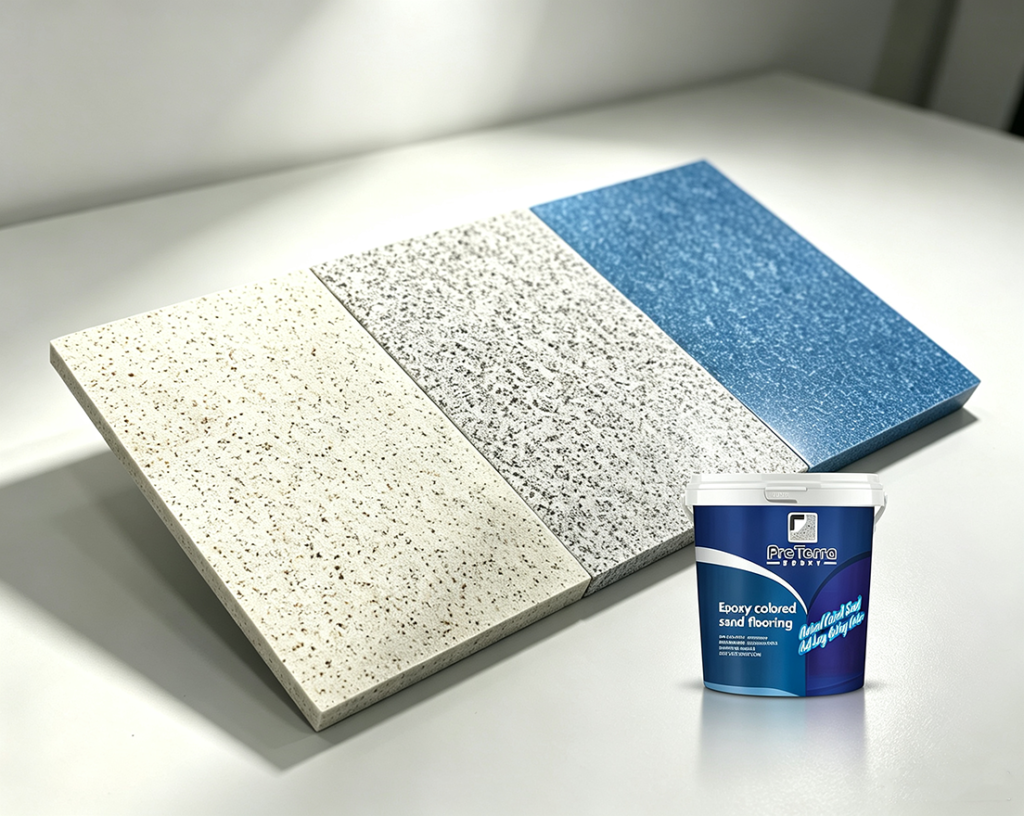
As for whether you can handle it yourself: theoretically, yes—but only if you have the right equipment. You will need a dust-free floor grinder, an angle grinder, a digital scale, a mixer, a notched trowel, a spiked (de-aeration) roller, a finishing trowel, and a vacuum cleaner—the cost of which alone is substantial. More importantly, the project demands significant physical stamina and patience. A professional installer typically completes only 20 to 30 square meters per day; an amateur will be even slower, likely taking three to four days to finish an entire home. Throughout the process, you will be constantly hunched over or squatting, which is physically exhausting. For small-scale repairs or localized areas—such as in a bathroom—those with decent DIY skills might consider giving it a try; it is advisable to test the process first in an inconspicuous corner. However, for large-scale projects covering an entire home, or if you are aiming for a high-level, perfectly smooth self-leveling finish, attempting it yourself carries a very high risk of failure.
Ultimately, the most critical concern is the likelihood of a botched job. Failures with epoxy-based colored grout (or epoxy-based floor coatings) generally stem from three main issues: first, incorrect mixing ratios, which can leave the material tacky, uncured, or prone to shedding sand; second, inadequate surface preparation, leading to peeling, whitening, or hollow spots (delamination) over time; and third, poor timing during the smoothing and cleaning phases, which can result in visible trowel marks, roller streaks, or hardened epoxy residue on the tiles that is extremely difficult to remove. Experienced professionals often point out that epoxy-based grout and flooring products are unique in that they require a specific level of technical expertise; if you don’t have a skilled professional, you are almost guaranteed a poor outcome. While this may be a slight exaggeration, it underscores the seriousness of the risks involved. Furthermore, if an epoxy-based application goes wrong, the rework process is far more arduous than with standard materials—it requires heating the material with a heat gun and painstakingly scraping it away, bit by bit. Since the material is typically three to four millimeters deep, any carelessness during removal can easily damage the underlying substrate.
In summary, if you have a limited budget, a small project area, strong DIY capabilities, and a high tolerance for potential imperfections, you might consider taking it on yourself. However, if you desire a professional-grade result, it is highly recommended to hire a specialized team with a proven track record. Additionally, be present on-site to monitor progress, and compare the work of different professionals across various job sites—this is the most effective way to minimize the risk of a disastrous outcome.